NiSi Filters Pro Nano Natural CPL-

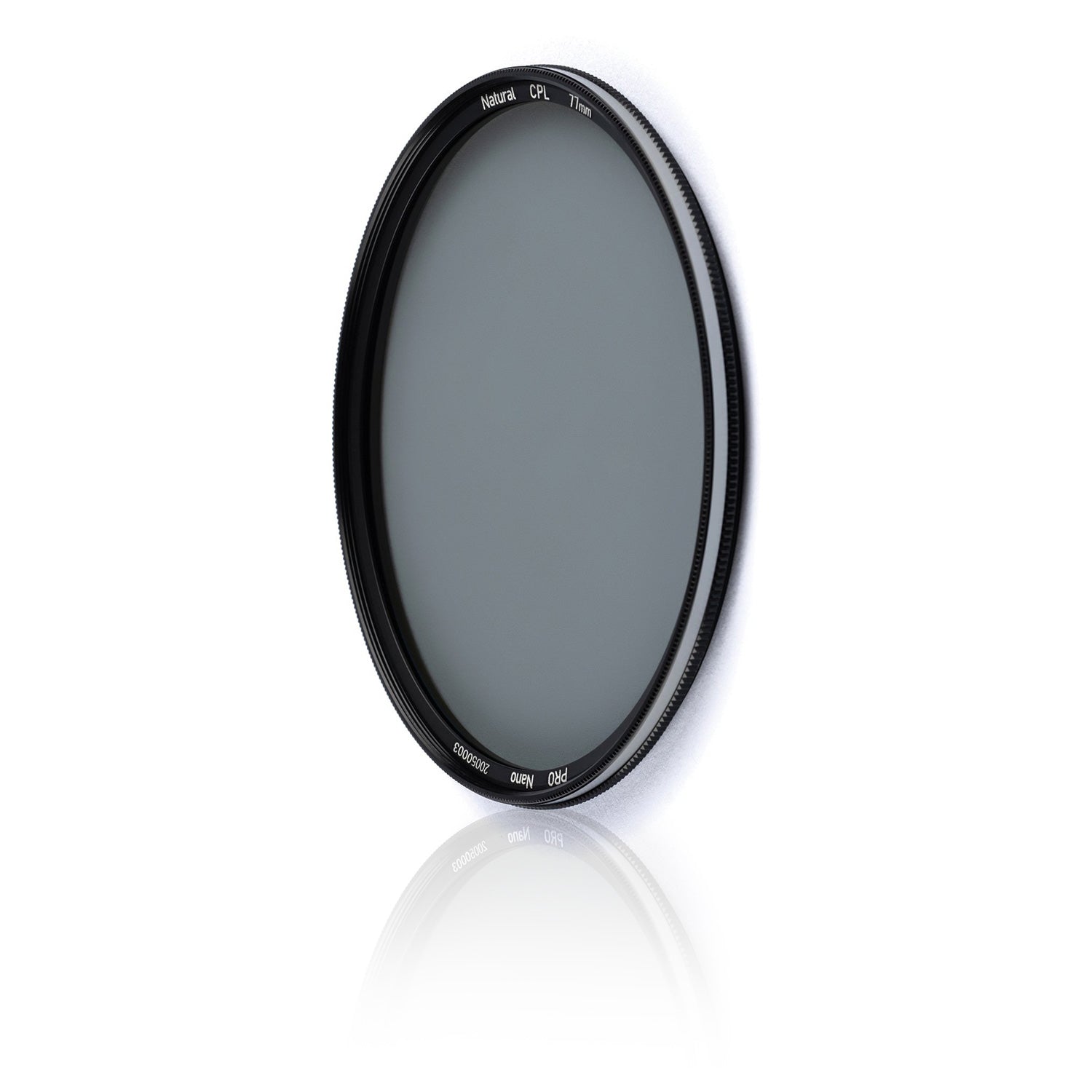
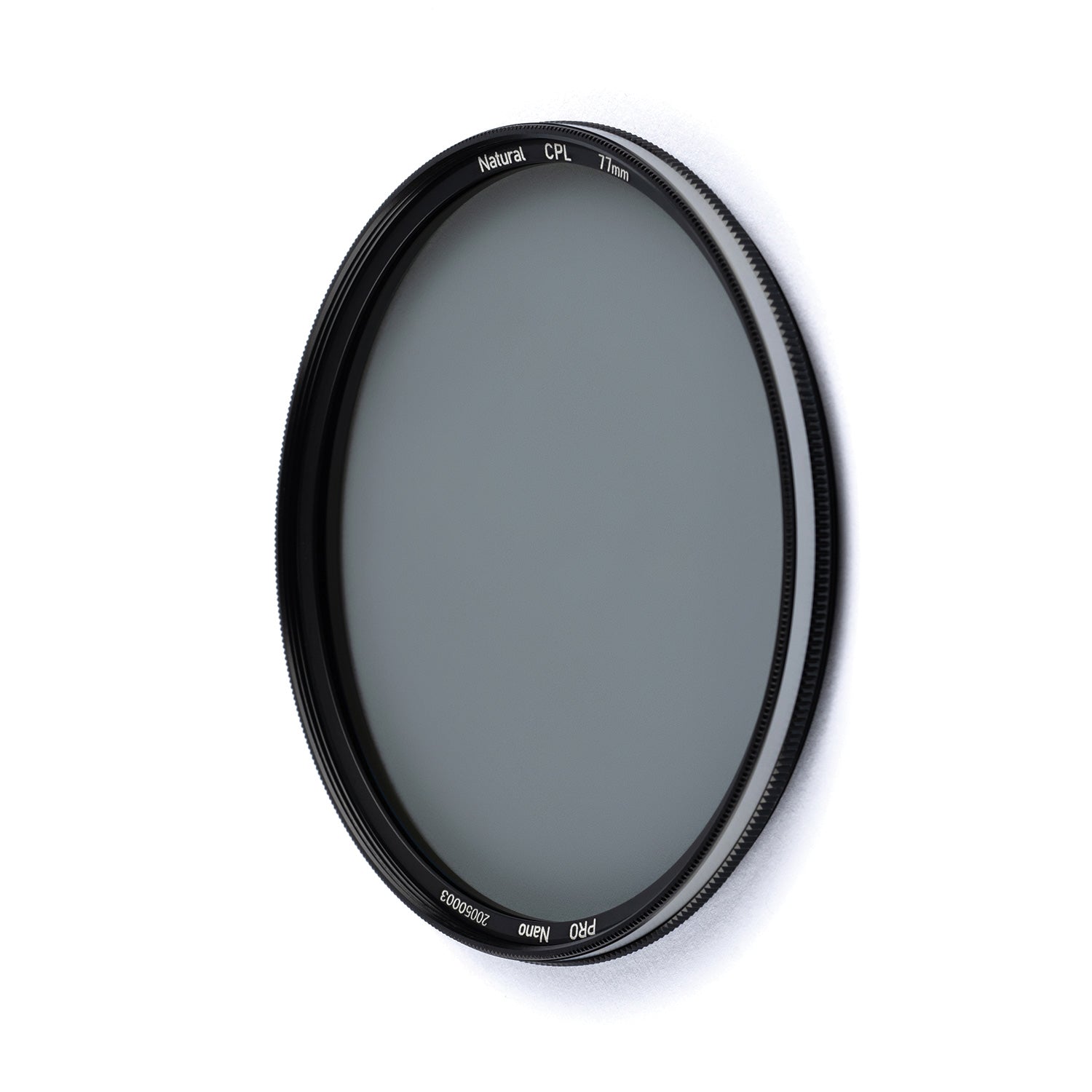
NiSi Filters Pro Nano Natural CPL

NISINATCPL46

Regular price R 989.00 Sale price R 494.00
/
Tax included.

Size

Looking for a size that isn't here? Check out the new Pro Nano True Color CPL

For more information on what a circular polariser is and how to use it, read this article by Hougaard Malan.

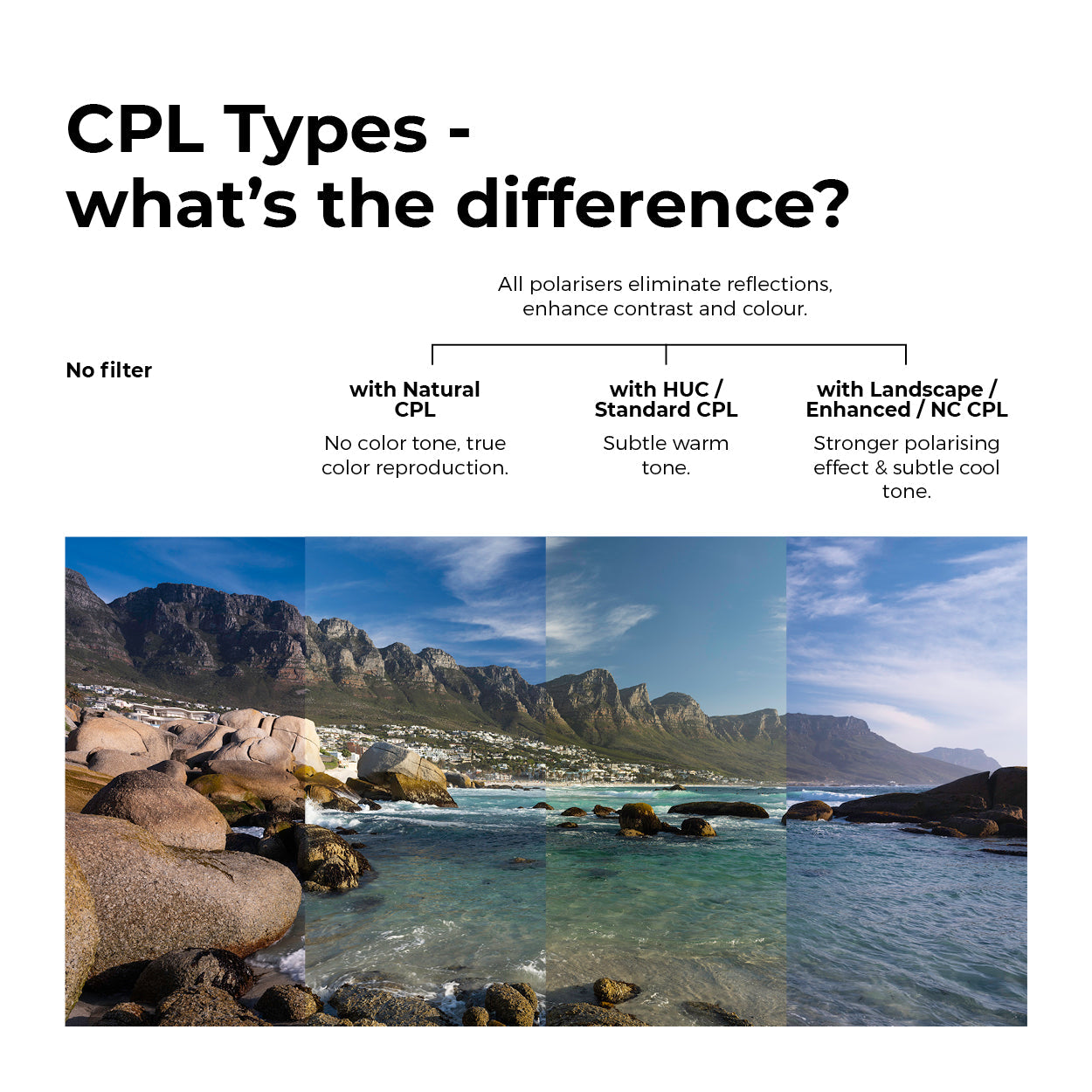
As of October 2020, NiSi offers three different CPLs, each with a key difference. The primary difference lies in the colour tone and choosing should be fairly easy. 

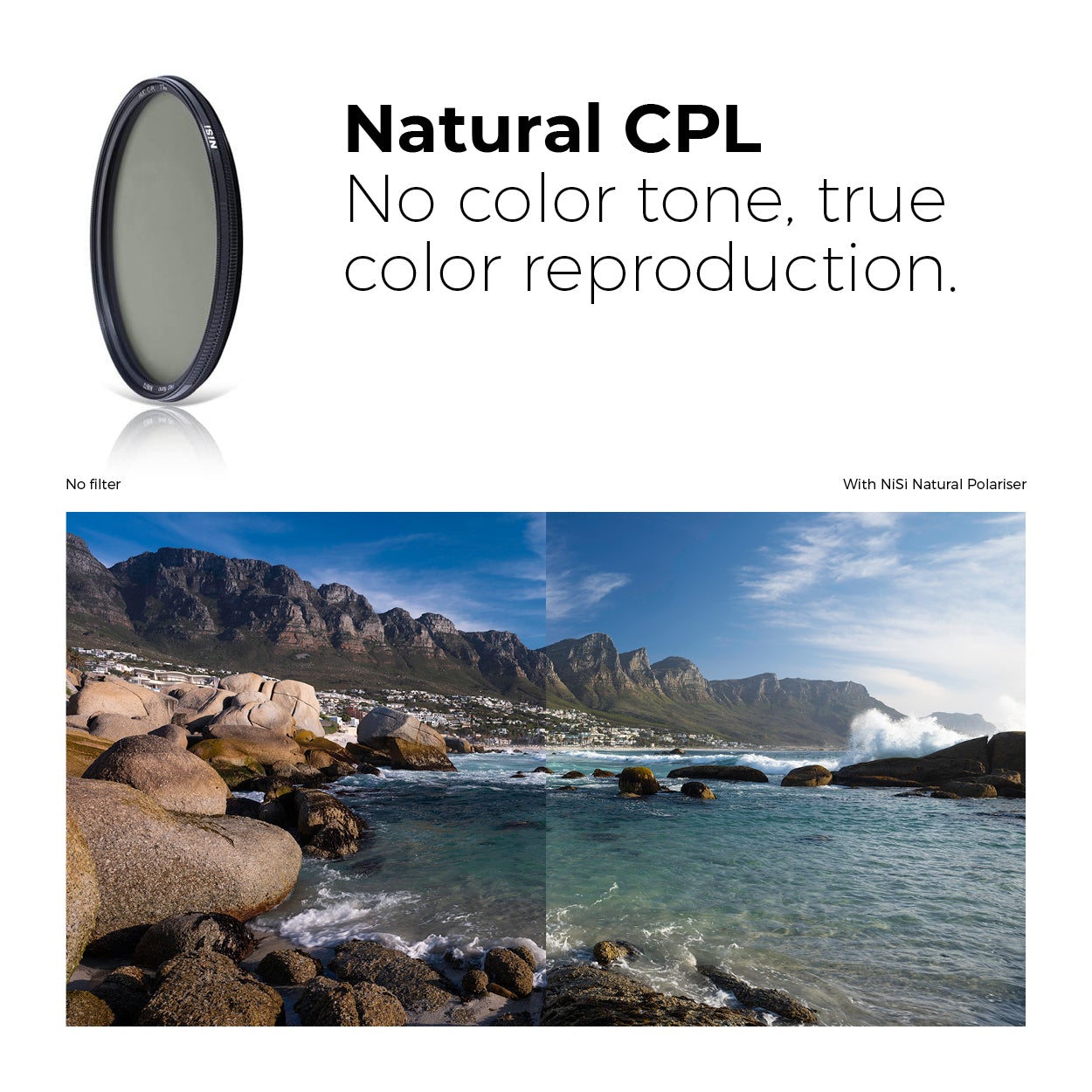
  • Natural / True Color CPL – This filter has no colour tone and renders colours true to the original scene. It’s important to keep in mind that polarization changes certain colours slightly, so if you pixel peep you will come across some difference and that is all natural and nothing to worry about.
  • Landscape Enhanced CPL – This filter has a subtle cool tone and it is slightly stronger than most CPL’s on the market. It is designed with landscape photographers in mind and helps to cut through more glare, while adding extra contrast to skies and giving water bodies that fresh, cool feeling. 
  • Standard CPL – This filter has a subtle warm tone, which can be great for anything from landscapes to architecture. 

It all comes down to personal taste and deciding whether you want a cool or warm tone or to keep all colour enhancement to the computer. Find more info and side by side comparisons in this article comparing the versions by Matt Bouch. 

When it comes to enhancing images, a circular polarizer is probably the oldest trick in the book. It can change a pale sky to a deep blue one, turn foliage into a luminous super-green, light up autumn colours, saturate rainbows and even make water look crystal clear. The added contrast, saturation and clarity that a polarizer can give to images is nothing short of magic and every photographer should have one in their bag.

Contrary to its name, a polarising filter does not polarise light; it filters out polarised light. Light from the sun is polarised when it bounces off any non-metallic reflective surface like water, foliage or various air particulates. Polarised light robs images of colour, clarity and contrast and is in many situations undesirable. A polarizing filter removes this 'damaged' light and ensures that only unpolarised light reaches the camera sensor to produce a sharp, saturated and contrast-rich image.

For this reason, a polarizing filter is a very popular tool for any photographer, but especially for landscape photographers. 

What is the difference between a linear and circular polariser? Digital cameras' AF systems are not compatible with linear polarizers. When the world was transitioning from film to digital, linear vs. circular was a big debate, but it no longer is. For photographic purposes, you can assume that any polariser on the market nowadays is circular and not linear. 


More about NiSi's Natural CPL

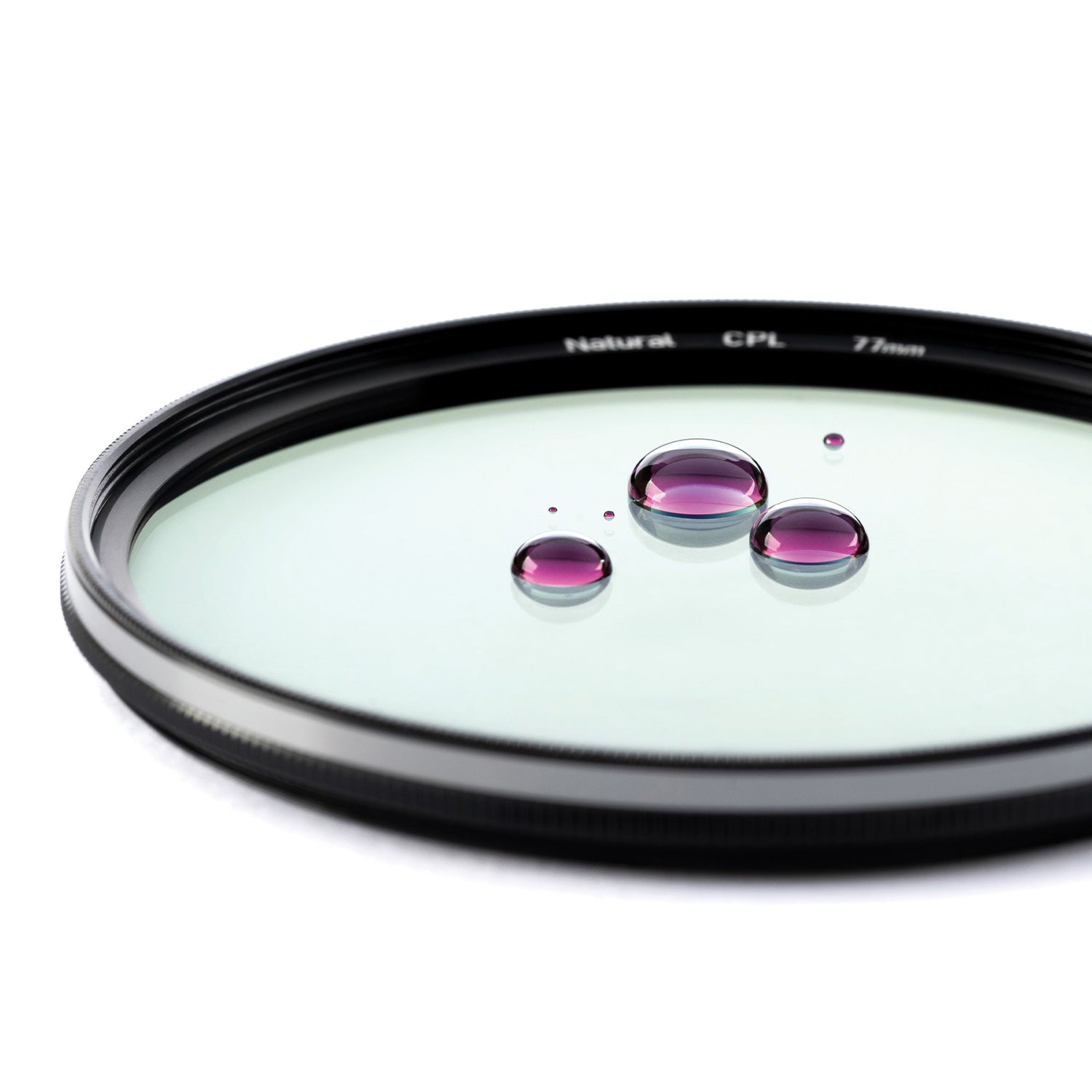
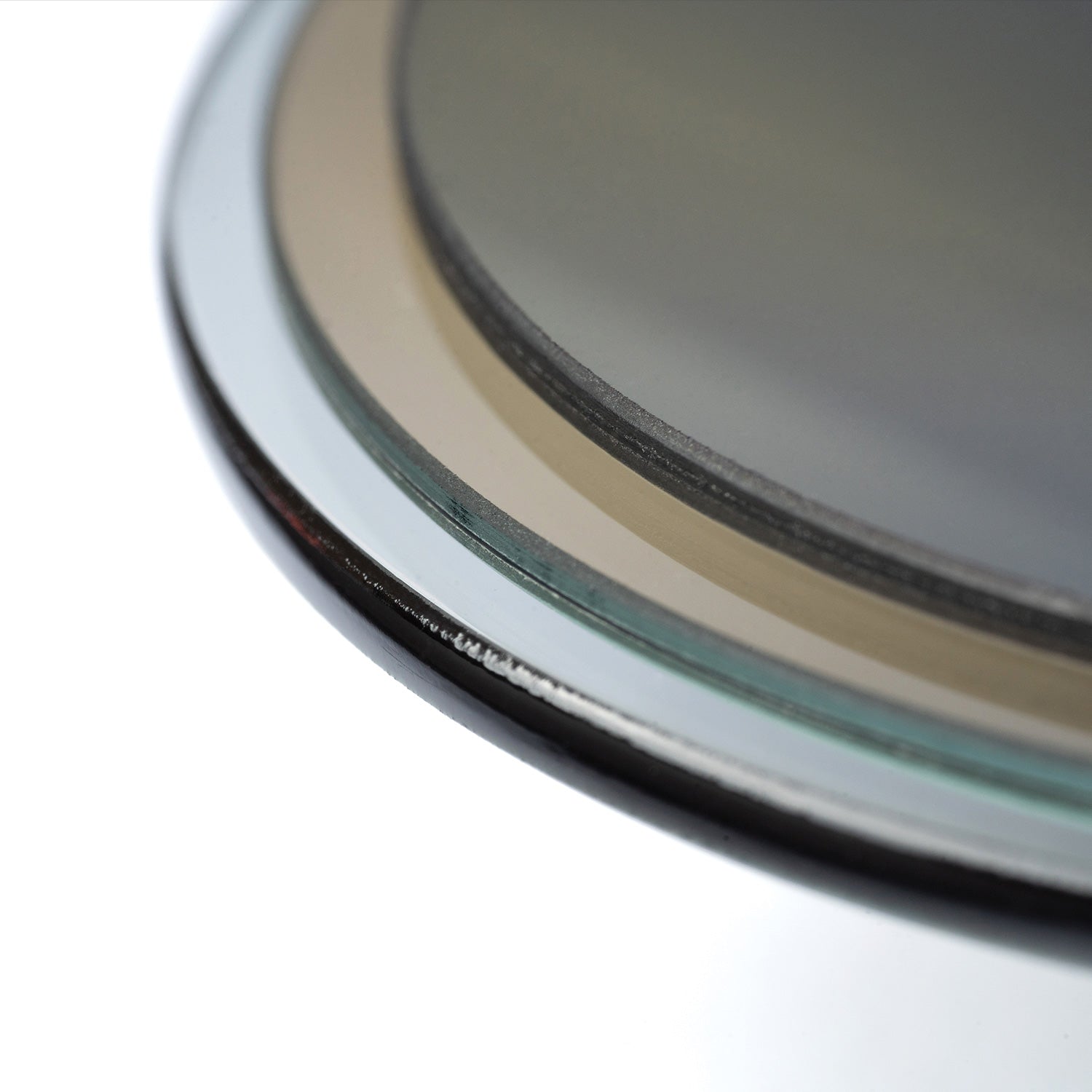
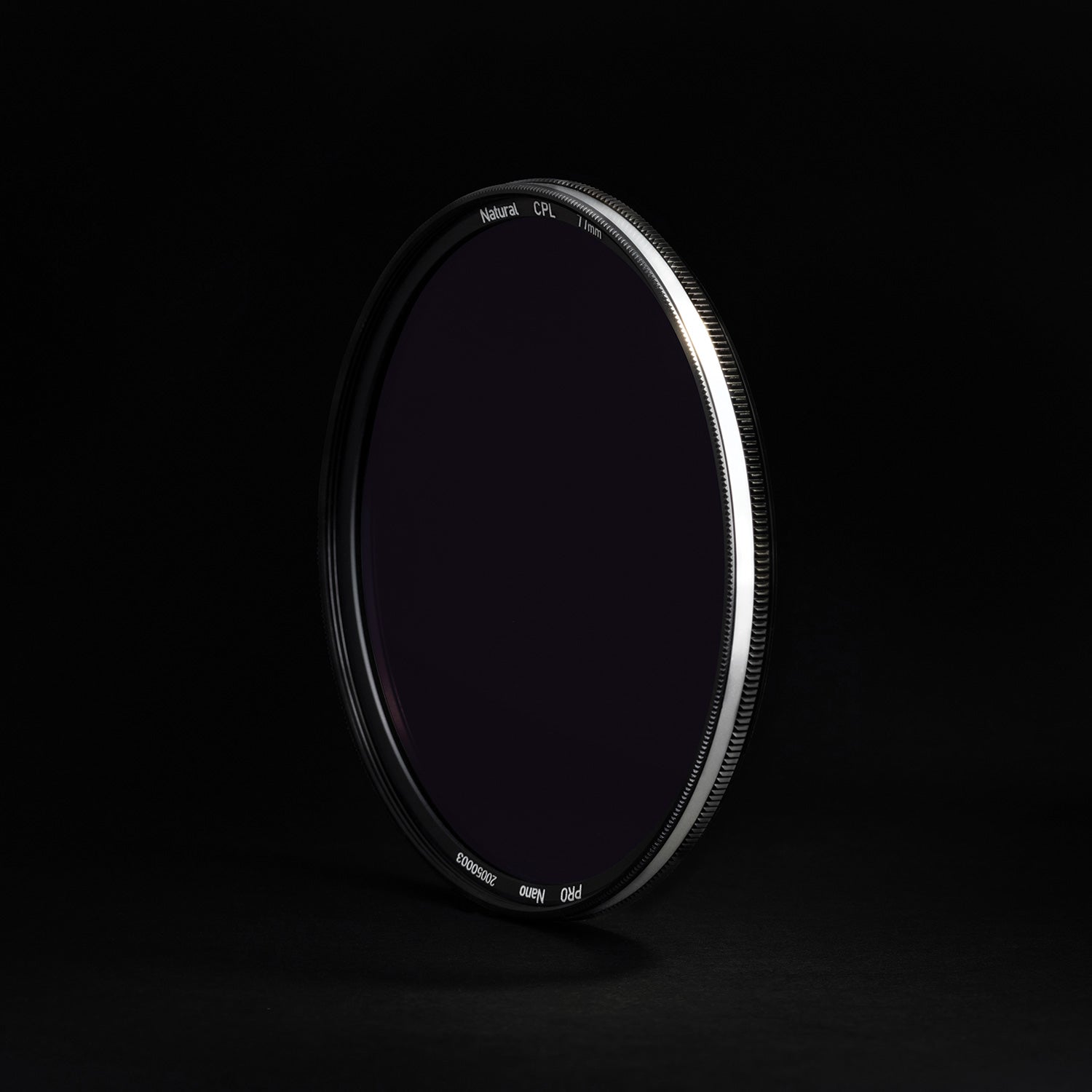
The NiSi Natural CPL is designed to reduce glare and reflections from non-metallic surfaces, increase saturation and vibrancy in the sky and foliage while ensuring true color reproduction is at its best by eliminating the warming effect that many polarisers create.  Our Natural CPL removes the warm tone seen with other brands of CPL filters and provides a closer true color representation of the scene. The Natural CPL features a unique two-tone frame with a silver front ring, black back ring and both are made from high-quality aluminum.  NiSi’s Natural CPL utilizes Cine seal technology which blackens the edge of the CPL for added durability. This technology reduces the influence of temperature fluctuations and keeps out condensation.

A Circular Polarizer Filter helps to reduce reflections and glare by filtering out light that has become polarized due to reflection from a non-metallic surface.  The light from the sun naturally becomes partially polarized due to reflecting off electrons in air molecules, causing the light to scatter into what appears as haze.  A polarizing filter arranges, and filters, this directionally polarized light perpendicularly to the reflected light, allowing for the absorption of much of this light.  This results in a noticeable reduction of glare and reflections from non-metallic surfaces and an increase in the saturation of skies, foliage, and allows the camera to capture what is under the surface of shallow water.

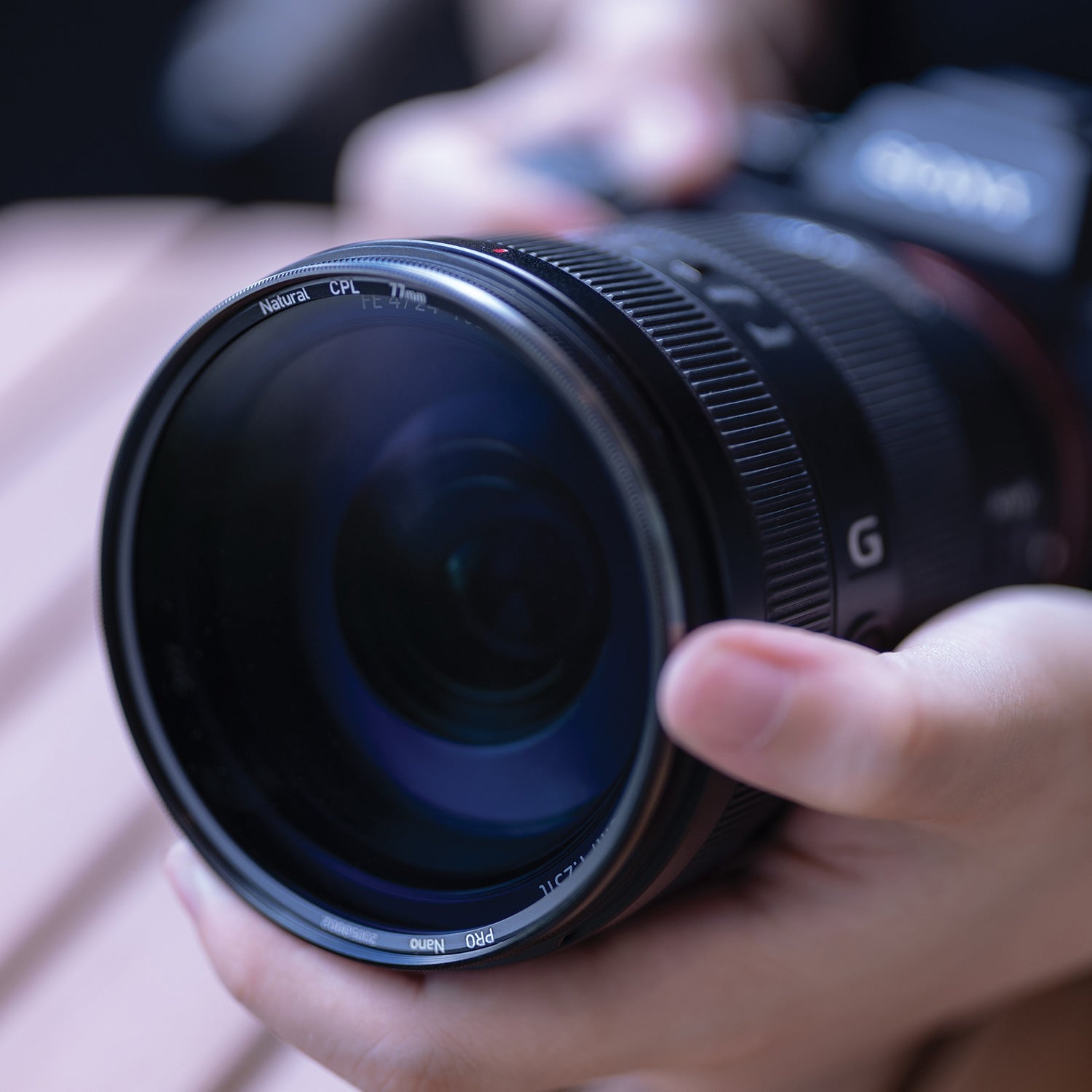
Our proprietary NiSi Pro Nano Coating helps to reduce unwanted reflections and provides a waterproof and scratch-resistant layer to assist in the cleaning of unwanted fingerprints, dust and water stains. The slimline frame of the NiSi Natural CPL is durable and tough and allows a lens cap to be attached for convenience.


CHOOSING NISI

Solid Neutral Density Filters

Solid neutral density filters lengthen exposure by cutting out a specific amount of light. This is very useful for creative purposes, whether you want to blur a wave, waterfall, leopard or a street scene.

They are available in many different densities, ranging from 2 to 20 stops, but the most popular are 3-, 6- and 10-stops.

3-Stop | 0.9 - This filter is used to add a slight blur to water before the sun has set or after it has risen. At f/16 and ISO100, it is impossible to achieve a slow enough shutterspeed to get the ideal amount of blur in the waves while the sun is up. Three stops of darkening will normally allow a shutterspeed of 1/10s to 1/2s during this golden sunlight phase, producing soft lines in the waves.

6-Stop | 1.8 - This filter serves the same purpose as the 10-stop, but it is better suited for sunset and sunrise. When the sun is close to setting or rising, a 10-stop ND will require a very long shutterspeed at f/11-16 and ISO100 to produce the correct exposure - often as much as 5-10 minutes. A 6-stop ND is thus much more suited for capturing long exposures of 30-60s around sunset and sunrise.

10-Stop | 3.0 - This filter is used primarily for blurring the sea to a flat mist and for blurring clouds into abstract lines. It can also be used to remove traffic and people from urban scenes by blurring the moving elements. At f/11-16 and ISO100, it usually produces a shutterspeed of 20-30s in early morning or late afternoon with strong sunlight.

15-Stop | 4.5 - This filter is serious long exposure territory and will produce exposures times of 1-4 minutes in peak daylight and 5-30 minutes during golden hour.

CHOOSING NISI

Graduated Neutral Density Filters

Landscape photographers use graduated neutral density filters because the sky is usually brighter than the land – especially in dramatic sunset light. Graduated ND filters are dark on the top half and transparent on the bottom half.

When the dark part is positioned over the sky of an image, it ‘reduces’ the amount of light allowed through that part of the frame and this results in a darkened exposure of the sky. On the left side of the image it shows the result without any filter and on the right it shows the result with the filter. Graduated Filters have two variables - the graduation type and the density. Read below to find out more.

CHOOSING NISI

Graduation Type

This determines how the filter changes from transparent to dark. No two landscapes are the same and thus there are different grads for different situations.

These filters are typically for scenes with a very dynamic horizon, like landscapes with trees or high mountains. Soft grads are the most forgiving and easiest for beginners to use.

Hard Grad - These filters are typically for scenes with a straight and uniform horizon, like the sea. If a hard grad is not positioned perfectly, it will be clearly noticeable in the image as a dark line below the horizon or a bright line above it. We advise that beginners stick to soft and medium grads.

Medium Grad – Medium grads are a newer product that most manufacturers only released in 2016/2017. Many photographers often found hard grads too hard and soft grads too soft and thus it was obvious that something in between was necessary. It is also the perfect solution for photographers that don’t want to commit to a hard or soft grad. Not everyone can afford to buy the full range of these filters and the medium grads are an excellent new compromise.

Reverse Grad – These filters serve a very niche, but useful purpose. When shooting into a bright sunset/sunrise, the brightest area is right on the horizon and then the sky darkens towards the top. When using a normal graduated ND, it will result in a correctly exposed horizon, but the top part of the sky will be far too dark. A Reverse Grad also has a clear lower half, but it is darkest in the middle and then gets lighter towards the top. This allows one to more accurately balance those exposures that are brightest on the horizon.

Focal Length Factor - A longer focal length softens the graduation as the image is captured through a smaller portion of the filter. If you shoot a lot of landscapes with your 24-70 or 70-200, then you'll need hard grads.

CHOOSING NISI

Graduation Density

All the different types of grads are available in different densities, because light is dynamic and different scenes require a different amount of ‘darkening’ of the sky. We stock a variety of 0.3, 0.6, 0.9 and 1.2 (0.3 = 1 stop) in NiSi's various size ranges.

The most popular densities are 0.6 and 0.9, but a 1.2 is becoming increasingly popular.

1. 0.3 (1-stop) is for experienced shooters, usually to be combined with a 0.6 or 0.9.

2. 0.6 (2-stop) is the most popular filter as a 2-stop difference between land and sky is most common. If you shoot a sunset/sunrise the 0.6 will be the all-rounder that best balances exposure between land and sky in most directions.

3. 0.9 (3-stop) is the ideal if you like shooting into the sunset as the 0.6 isn’t always dark enough for into-the-sun shots. The issue with the 0.9 is that it will be too dark if shooting 90-degrees from the sun or with the sun at your back.

4. 1.2 (4-stop) is for shooting directly into a very bright sunset/sunrise.

CHOOSING NISI

Local ambassadors

See how local NiSi ambassador Kyle Goetsch is putting his filters to work. Photo by Kyle Goetsch taken with the NiSi 6-stop ND.